Cherrapunji Travel Guide 2026: Waterfalls, Living Root Bridges, Caves & Everything In Between
There is a moment, somewhere between Shillong and Cherrapunji, where the road drops and the clouds just appear. Not above you. Around you. Like the sky decided to meet you halfway.
That is when you know you are close.
Cherrapunji, or Sohra as the locals call it, is one of those places that does not ask for your attention. It just takes it. And once it does, you do not get it back easily.
This Cherrapunji travel guide for 2026 covers everything, including the best waterfalls, the legendary living root bridges, the caves, the food, the best time to visit, and how to get here, so you can plan a trip that actually makes sense.
Why Cherrapunji Still Hits Different in 2026
People assume Cherrapunji is all about rainfall records. And yes, it held the world record for the wettest place on earth for a long time. But that is honestly the least interesting thing about it.
What Cherrapunji actually gives you is this rare combination of raw natural landscape and quiet Khasi culture that most of Northeast India has not yet commercialized.
The waterfalls here are not just scenic. They are dramatic. The living root bridges are not just a photo op. They are a 500-year-old engineering story. The caves here go so deep that you carry a headlamp and still feel like you are borrowing someone else's darkness.
For travelers who come to Northeast India for the genuine version of things, Cherrapunji is non-negotiable.
Getting to Cherrapunji
Cherrapunji is about 54 kilometers from Shillong, which is the entry point for most visitors to Meghalaya.
From Guwahati: You take the route to Shillong first, which is around 100 kilometers, and then drive to Cherrapunji. The full journey takes approximately 4 to 5 hours depending on traffic and road conditions near Nongpoh.
From Shillong: Expect 1.5 to 2 hours by road. The drive itself is worth it. The road curves through pine forests and small Khasi villages, and somewhere along the way, the temperature drops and the light changes completely.
Best way to travel: Private cab is your most flexible option. If you are booking through a tour operator in Guwahati, most Meghalaya tour packages include Cherrapunji as a dedicated day or two within a 5 to 6 night itinerary.
Shared taxis from Shillong are available but they do not wait for you at viewpoints, which defeats half the purpose.
Best Time to Visit Cherrapunji
This is the question everyone asks, and the honest answer is: it depends on what you are chasing.
October to February is the most comfortable time to visit. The skies are clearer, the waterfalls are full from monsoon runoff, and the air is cool enough that you actually want to walk. This is peak season for the living root bridges trek because the paths are manageable.
June to September is monsoon season, and Cherrapunji in the rains is something else entirely. The waterfalls are at maximum capacity. The mist is so thick it feels theatrical. But the roads can get tricky, and some treks get called off. If you are okay with that unpredictability, the views are unforgettable.
March to May is the shoulder season. Drier, fewer crowds, slightly less dramatic waterfalls. Still a good time if you want a quieter experience.
For 2026, if you are planning a Northeast India trip in the October to January window, Cherrapunji sits at the top of the itinerary list without much argument.
The Waterfalls of Cherrapunji
Let us be honest. The waterfalls are why most people come here first.
Nohkalikai Falls
This is the tallest plunge waterfall in India, dropping about 340 meters into a blue-green pool below. You see it from a viewpoint at the edge of a cliff, and for a minute, your brain struggles to process the scale of it.
The water color at the bottom looks artificially blue in photographs but it is genuinely that color in person. Something about the minerals in the rock.
Come early in the morning before the tour buses arrive. The walk to the viewpoint is short and easy.
Seven Sisters Falls (Nohsngithiang Falls)
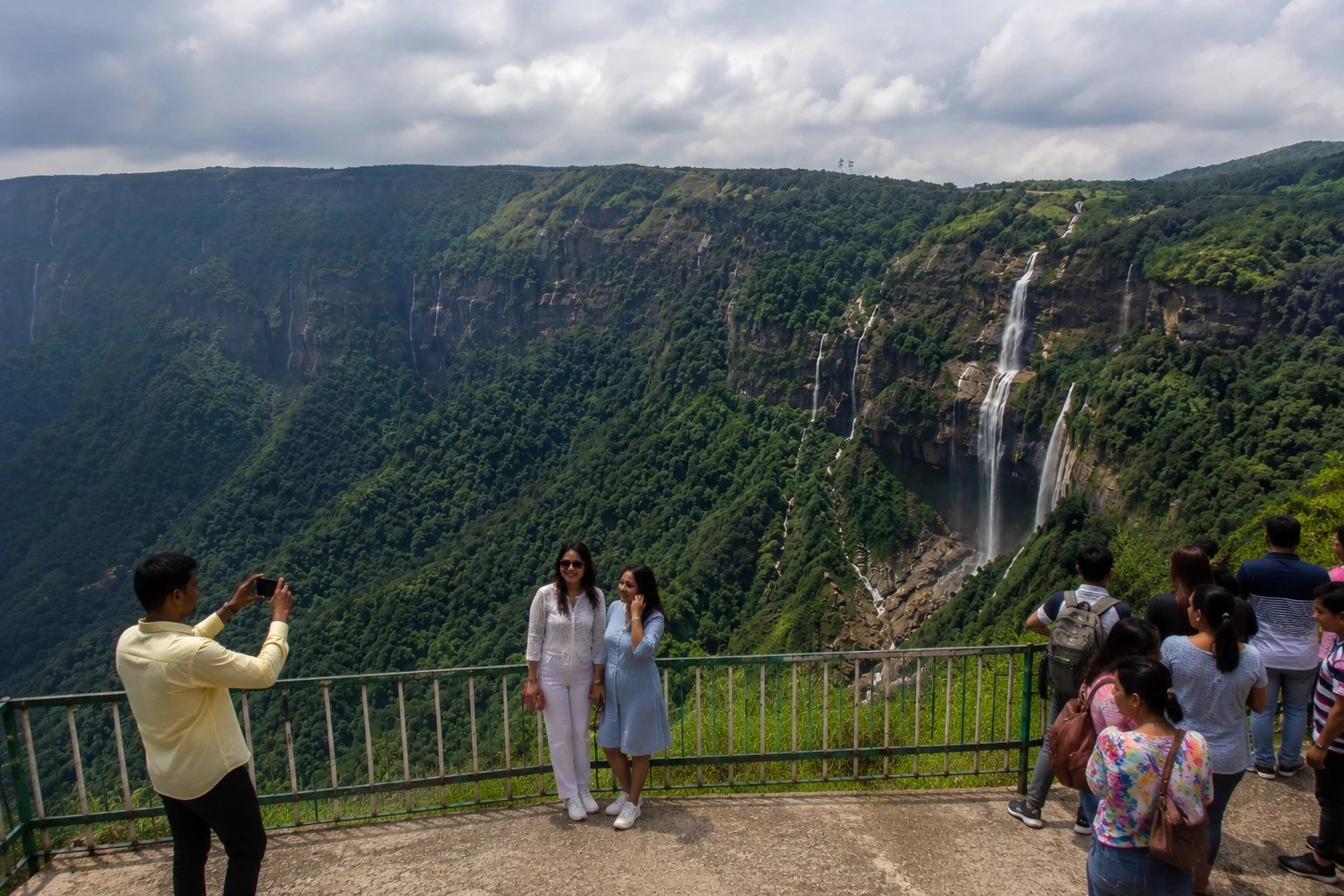
Seven streams falling side by side across a massive rock face. During peak season, all seven are running simultaneously and the sound alone is worth the visit. In the dry season, you might see only two or three, but the landscape around the falls is still striking.
Best viewed from the road-side viewpoint. Carry a light jacket because the mist reaches you even at the viewing distance.
Dainthlen Falls
Smaller than the others, but the Khasi legend behind it is genuinely interesting. Local storytelling says a giant serpent named Thlen was killed here by a hunter. The rock formations around the falls carry that mythological weight somehow.
If you are doing a full-day sightseeing loop, Dainthlen fits well as a quick stop.
The Living Root Bridges
This is the experience that separates a Cherrapunji trip from a regular hill station holiday.
The Khasi people of Meghalaya have been training the roots of rubber fig trees across streams for centuries. These roots, guided by hand over decades, grow into bridges strong enough to hold the weight of multiple people at once. Some of these bridges are over 500 years old.
Double Decker Root Bridge, Nongriat
This is the most famous one, and for good reason.
You reach it by trekking down approximately 3500 stone steps from the village of Tyrna, about 8 kilometers from Cherrapunji town. The descent takes around 1.5 to 2 hours. The ascent on the way back is harder and takes closer to 2.5 to 3 hours.
The double decker bridge sits at a lower level with a second bridge layered above it. Both are fully functional. Both are ancient. The whole setting, with the stream below and the jungle around it, makes you feel like you have walked into a geography that chose its own rules.
Wear proper trekking shoes. Carry water and snacks. The Nongriat village at the bottom has a small guesthouse if you want to spend the night and skip the return climb on the same day.
This trek is genuinely tiring but it is one of those experiences you talk about for years.
Caves in Cherrapunji
Mawsmai Cave
The most accessible cave near Cherrapunji and the most visited. It is about 150 meters long with a clear walking path through it. The stalactite and stalagmite formations inside are well-lit and striking.
It takes about 20 to 30 minutes to walk through. Good for families and anyone who wants the cave experience without serious spelunking.
Arwah Cave
Less crowded than Mawsmai and longer, stretching over 5 kilometers though only part of it is open to visitors. Inside, there are fossil formations that are reportedly millions of years old.
The guide here will point out shapes in the rock that look like flowers, animals, and faces. Whether or not you see them the same way is part of the fun.
Allow an hour to an hour and a half for Arwah.
Other Places to See Around Cherrapunji
Mawkdok Dympep Valley Viewpoint: One of the best viewpoints on the Shillong to Cherrapunji road. The valley drops steeply and on clear mornings, the fog sits in layers below you. Stop here on the way.
Eco Park: Managed viewpoint area with gardens and views toward Bangladesh. The border visibility on a clear day is a quiet reminder of just how far into the edge of the subcontinent you have traveled.
Wakaba Falls: A lesser-known waterfall a short walk from the road. Worth the small detour if you have time in the afternoon.
Where to Eat in Cherrapunji
Food options in Cherrapunji town are simple. Do not expect a restaurant scene. Do expect fresh, straightforward meals.
Look for local dhabas and small eateries near the Cherrapunji market area. Jadoh, a Khasi rice and pork dish, is the thing to try if you eat non-vegetarian food. It is often served with a simple lentil preparation and tastes better than it looks.
If you are staying at one of the resorts on the outskirts, most of them serve meals. Book your dinner in advance if you are staying overnight, as options thin out after 7 pm.
Stay Options in Cherrapunji
There are several good mid-range resorts in and around Cherrapunji with valley or cliff views. Cherrapunjee Holiday Resort and Polo Orchid Resort are frequently recommended. Both offer clean rooms and decent food with views that make waking up early feel like a good idea.
For budget travelers, guesthouses in town are available. If you are doing the Nongriat trek, staying overnight in the village guesthouse is an option that most people who have done it say was worth it.
Day 2 Evening Drive back to Shillong or Guwahati
- Comfortable, reliable vehicles with drivers who know every curve of the
- Shillong–Cherrapunji route
- Customised itineraries - whether you want to focus on waterfalls, trekking, caves,culture, or a mix of everything
- Local knowledge that goes beyond the standard tourist circuit - the hidden waterfalls, the best local eateries, the village experiences that most tourists miss
- End-to-end support from the moment you land in Guwahati to the moment your trip ends
One Last Thing About Cherrapunji
There is a version of this place that exists in the rain, at 6 in the morning, when the falls are roaring and the clouds are sitting inside the valley like they own it.
Most tourists miss that version because they arrive at 10 am after a late start from Shillong.
Go earlier than you think you need to. Stay later than you planned. And let Cherrapunji show you something the itinerary did not account for.
That is usually the best part.
Whether you're a first-time visitor to Northeast India or a seasoned traveller returning for more, Cherrapunji will give you something new every single time. Ready to plan your Cherrapunji trip? Reach out to Aviyatra today, and let's create an itinerary that makes every moment of your Northeast India journey count. Aviyatra Pvt. Ltd. | Based in Guwahati, Assam | Operating across Assam, Meghalaya, Arunachal Pradesh & Nagaland
Tags: Cherrapunji travel guide 2026, places to visit in Cherrapunji, Cherrapunji tourism, Nohkalikai Falls, Double Decker Living Root Bridge, Mawsmai Cave, Seven Sisters Falls, best time to visit Cherrapunji, Sohra Meghalaya, Cherrapunji itinerary, Guwahati to Cherrapunji cab, Northeast India travel, Aviyatra tours Meghalaya